Laptop Charger Repair Tips
A proper laptop charger repair workflow starts with diagnosis (checking cables, plug, and adapter housing), then moves to safe disassembly, component testing, and targeted repair (resoldering wires, replacing damaged plugs, or fixing internal circuits). Always confirm output voltage with a multimeter before reassembly to avoid damaging the laptop.
🔧 Step-by-Step Laptop Charger Repair Workflow
1. Initial InspectionCheck for frayed cables, bent DC plugs, cracks, or burn marks.Test the wall outlet with another device to rule out external issues.Wiggle the cable near the adapter and plug — flickering charging light indicates a broken wire.
2. Safety PrecautionsUnplug the charger before handling.Discharge capacitors inside the adapter (they can hold dangerous voltage).Use insulated tools and avoid working on live circuits.
3. DisassemblyCarefully pry open the adapter casing using a chisel, hacksaw, or screwdriver.Some chargers are glued shut — patience and controlled force are required.
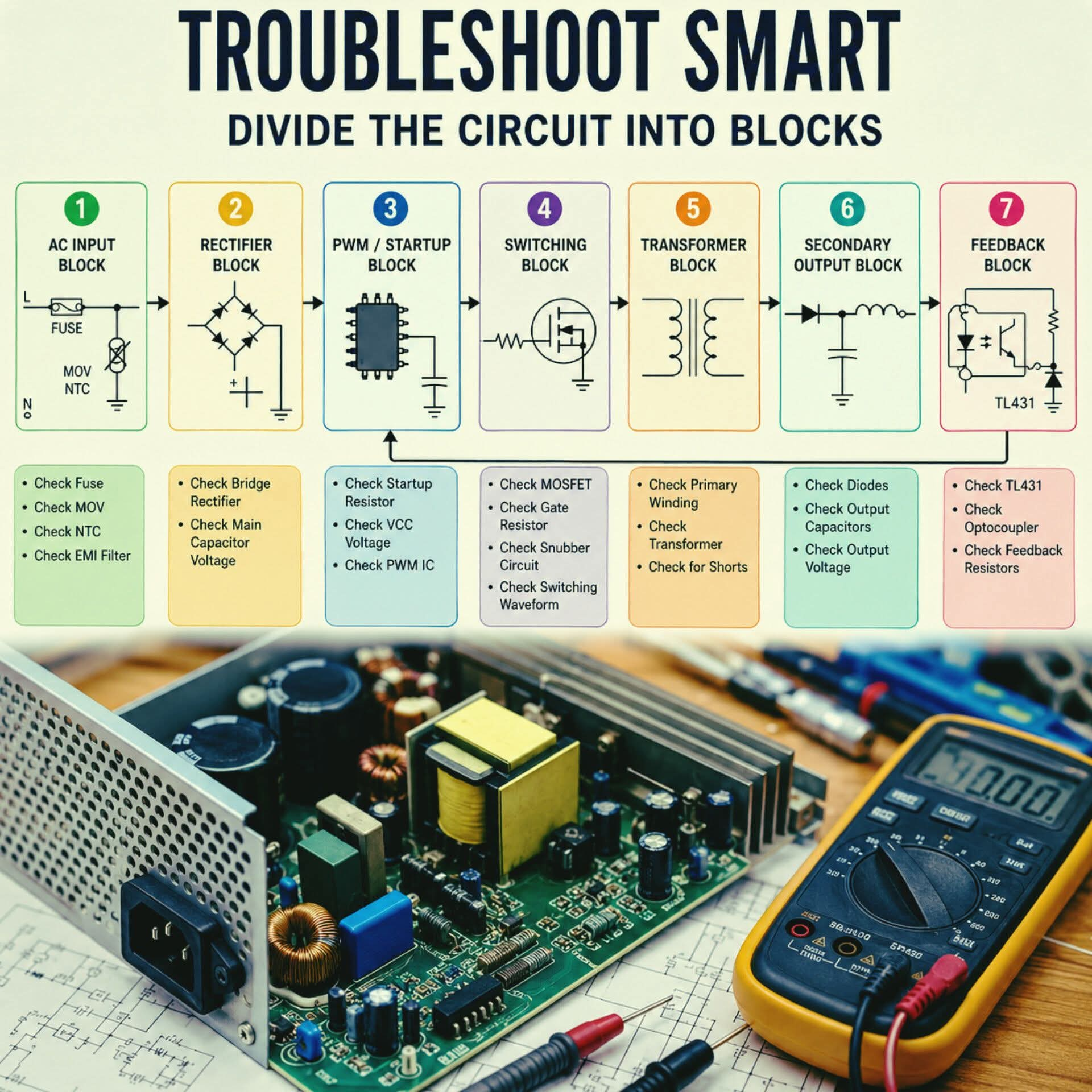
4. Testing ComponentsUse a multimeter to measure DC output voltage. Compare with the rated values on the charger label.Inspect the transformer, rectifier, and filtering circuits for burn marks or failed components.
5. Repair ActionsCable repair: Cut out damaged sections, strip wires, solder, and insulate with heat-shrink tubing or electrical tape.DC plug replacement: Replace bent or broken plugs with compatible replacements.Internal circuit repair: Replace burnt resistors, capacitors, or MOSFETs if visibly damaged.
6. ReassemblySeal the adapter casing with epoxy or strong adhesive for durability.Add strain relief (rubber or tape reinforcement) to prevent future cable stress.
7. Final TestingMeasure voltage again with a multimeter.Plug into the laptop and confirm stable charging without overheating.
⚠️ Risks & Considerations
High voltage hazard: Chargers contain capacitors that can store dangerous charge.
Warranty void: Opening the adapter cancels manufacturer warranty.
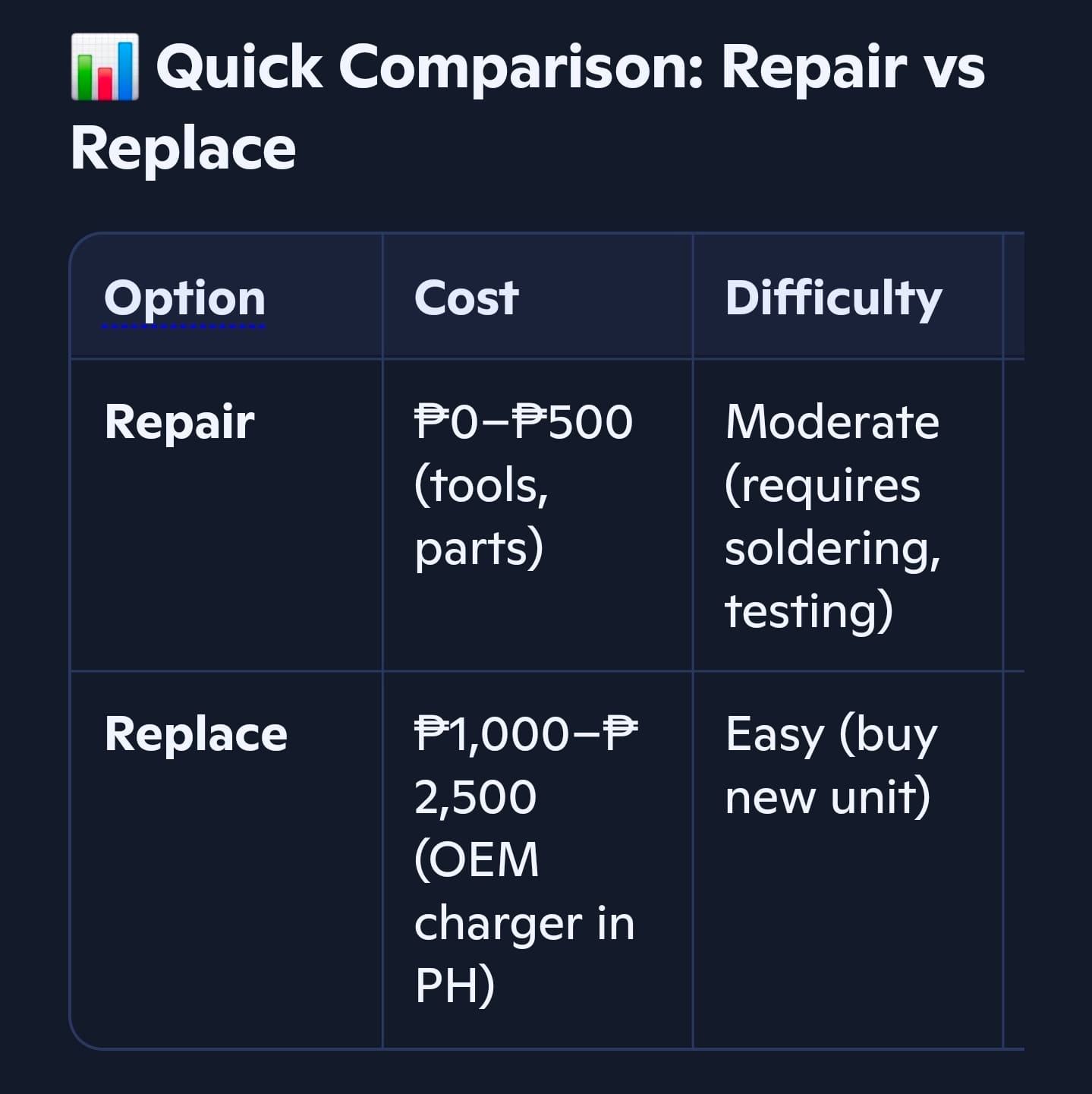
Replacement vs. repair: If the transformer or rectifier is burnt, replacement is often safer and more cost-effective.